
















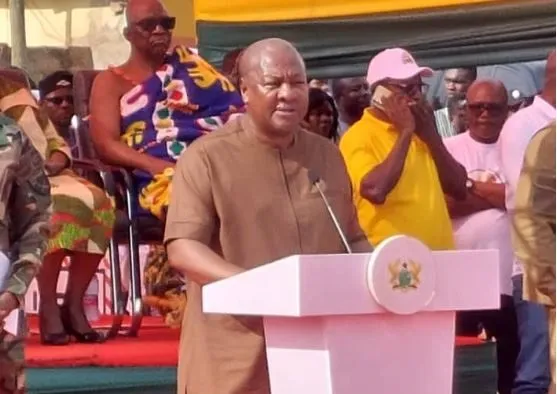
President John Dramani Mahama is turning to Ghana’s agricultural roots with a forward-looking twist, launching the ambitious Feed Ghana Programme aimed at transforming the nation’s food system and reducing reliance on imports.
The initiative, which was officially launched in Techiman in the Bono East Region on Saturday, April 12, 2025, blends technology, tradition, and community-based farming to reignite national interest in agriculture.
Addressing a packed gathering, President Mahama invoked a powerful sense of nostalgia as he referenced the “Operation Feed Yourself” era of the 1970s—a time when families commonly cultivated backyard gardens and produced their own food. But this time, he explained, the approach will be backed by innovation.
“We’re investing in modern techniques like greenhouse farming and urban agriculture,” he said, “but we’re also encouraging every household to grow what they eat—just like we used to.”
The programme signals a broader cultural and economic shift. Mahama noted that Ghana spends nearly $400 million annually on chicken imports, a figure he described as “alarming and unsustainable.” The Feed Ghana agenda aims to curb such dependency by enhancing domestic production of meat and vegetables.
Crucially, Mahama’s strategy is not only aimed at farmers but at schools and students as well. Feed Ghana will introduce school-based farming projects to provide fresh, nutritious meals while shifting the mindset around agriculture from “subsistence” to “opportunity.”
“We want students to grow vegetables and raise animals for their meals,” he said. “This will not only improve nutrition but help them see agriculture as a career path—not just a classroom topic.”
The initiative marks one of the most holistic attempts at agricultural revival in Ghana’s recent history, weaving in education, youth engagement, and national pride.
“This is not just a government policy. It’s a movement to make farming a daily part of Ghanaian life again,” Mahama emphasized.
Feed Ghana is set to roll out in phases, beginning with pilot projects in schools, urban communities, and farming zones. If successful, it could become a cornerstone of the country’s journey toward food sovereignty and economic resilience.






