
















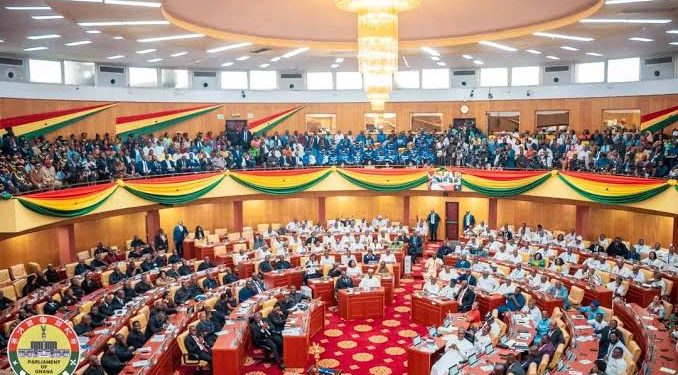
A disagreement over the timetable for vetting three Supreme Court nominees has triggered a walkout by the Minority in Parliament, with the opposition side accusing the Majority of rushing the appointment process.
The Minority, led by Minority Leader Alexander Afenyo-Markin, boycotted the vetting before the Appointments Committee on Thursday, August 27, arguing that the process should be subjected to a longer period of parliamentary scrutiny.
The Minority maintains that there is currently no vacancy on the Supreme Court bench requiring the appointments to be treated with urgency. According to the group, the nominations appear intended to expand the existing number of Justices rather than fill vacant positions.
Addressing the Appointments Committee before the walkout, Mr Afenyo-Markin said the Minority’s position was not a rejection of the nominees or the constitutional requirement for their vetting.
He said the concern was instead about the compressed timeline adopted by Parliament, insisting that the nominees should receive the same level of scrutiny that has traditionally accompanied appointments to the apex court.
“These nominations came to the House on Monday,” he said, challenging the Majority to explain why the process could not be allowed to run for the standard period.
He called for the committee’s sitting to be suspended and the appropriate notice issued to allow the 14-day period to elapse before the nominees appeared for vetting.
Mr Afenyo-Markin argued that allowing more time for public scrutiny would not cause harm to the state, the Judiciary or litigants, particularly because the Minority does not consider the appointments to be responding to an immediate vacancy.
He further stressed that the objection was intended to protect parliamentary procedure and constitutional standards rather than frustrate the work of the Appointments Committee.
However, the Committee’s Chairman, Bernard Ahiafor, rejected the Minority’s argument, describing the grounds for the boycott as “flimsy”, “hollow” and “baseless”.
Mr Ahiafor said the committee was bound by decisions taken by Parliament as a whole and could not independently alter directions approved by the plenary.
He advised any member dissatisfied with the House’s decision to use the procedures provided under Parliament’s Standing Orders to seek a reversal.
“I will not preside over this committee and purport to vary the orders or directions or decision taken at the plenary by the entire House,” he said.
The Chairman also rejected the suggestion that Supreme Court nominees should be subjected to a different procedure from other nominees appearing before the Appointments Committee.
The disagreement ultimately resulted in the Minority leaving the proceedings, bringing its participation in the vetting to an abrupt end.
The three nominees are Justice Sophia Bernasko-Essah, a Justice of the Court of Appeal; Justice Edward Amoako Asante, also a Court of Appeal Justice and former President of the ECOWAS Court of Justice; and private legal practitioner Anthony Forson Jr., a former President of the Ghana Bar Association.
The development adds a procedural dispute to the ongoing consideration of the nominees for appointment to Ghana’s highest court.






