
















The Minority in Parliament has raised alarm over the financial health of the Bank of Ghana (BoG), warning that the central bank may require a government bailout if urgent steps are not taken to stabilise its operations.
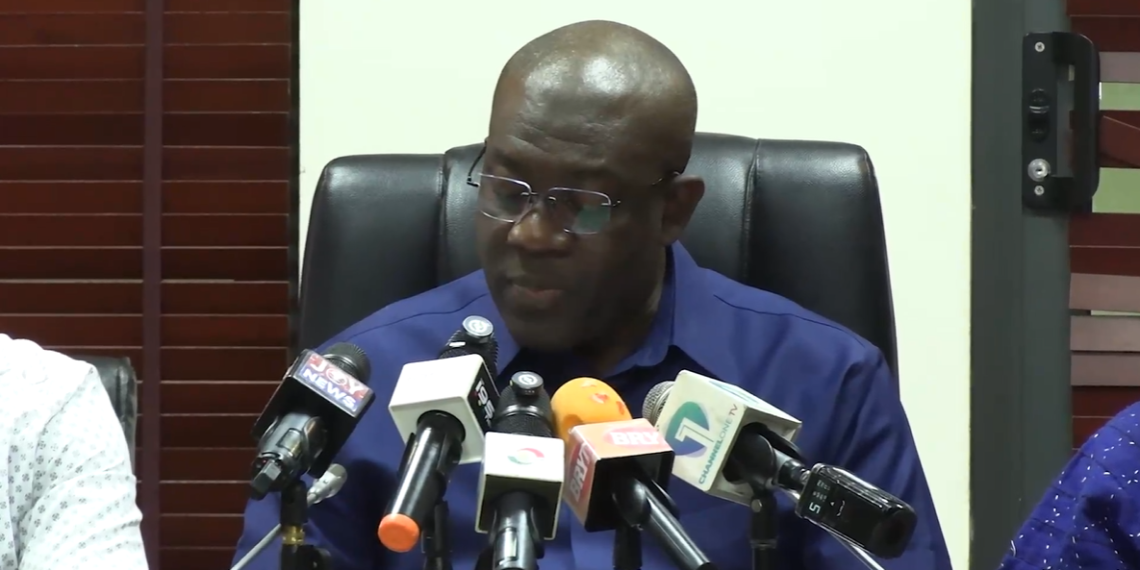
At a press conference in Accra on Sunday, May 3, Ranking Member on Parliament’s Economy and Development Committee, Mr Kojo Oppong Nkrumah, said the Minority’s review of the BoG’s 2025 audited financial statements showed that the central bank could no longer fund its core monetary operations without relying on extraordinary measures.
He argued that while the Bank’s financial statements presented an impression of stability, a deeper analysis revealed a more troubling picture.
According to the audited accounts, the BoG posted operational income of GH¢22.2 billion against sterilisation costs of GH¢16.7 billion, suggesting a surplus of GH¢5.5 billion.
However, the Minority said that figure was inflated by a one-off GH¢9.6 billion gain from the sale of gold reserves, which it argued should not be treated as recurring operational income.
After excluding the gold sale proceeds, the caucus said the Bank’s operational income falls to GH¢12.7 billion, leaving a deficit of about GH¢4 billion.
“Minus GH¢4 billion puts the Bank of Ghana in policy insolvency,” Mr Oppong Nkrumah said.
He described the use of gold reserve sales to support operations as unsustainable and warned that continued reliance on such measures could weaken the Bank’s long-term financial stability.
The Minority also accused BoG management of making costly policy decisions that worsened the Bank’s financial strain.
It cited the abandonment of previous liquidity management tools and the growing use of expensive sterilisation instruments, which it said pushed interest payments on BoG bills to more than GH¢14 billion in 2025.
“These are not unavoidable costs. They are the direct result of policy choices that have significantly increased the financial burden on the Bank,” the caucus stated.
The group warned that the Bank’s weakening financial position could undermine its ability to maintain price stability and support economic growth.
It noted that although the BoG’s losses had declined from GH¢13.23 billion in 2023 to GH¢9.49 billion in 2024, the trend reversed sharply in 2025 when the Bank recorded a headline loss of GH¢15.6 billion.
The Minority insisted that the real financial impact could be far higher when broader accounting measures are considered.
It also accused authorities of downplaying the severity of the situation by presenting what it described as a selective narrative about the Bank’s finances.
The caucus said it would soon present proposals aimed at restoring the central bank’s financial health and protecting its long-term sustainability.
“This is not a moment for vindication. It is a moment for urgent action to protect the integrity and sustainability of the Bank of Ghana,” the Minority stressed.






