
















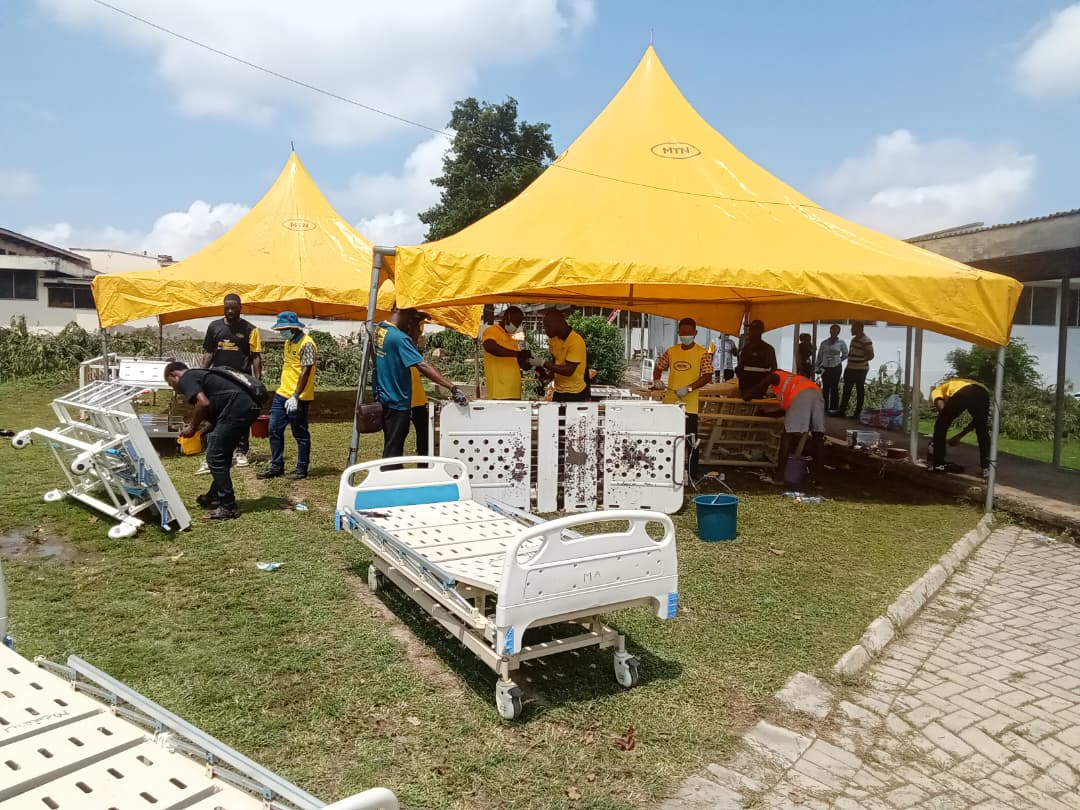
Efforts to address Ghana’s persistent hospital bed shortages have received a boost as the MTN Ghana Foundation launches a nationwide intervention aimed at refurbishing and restoring broken hospital beds and accessories in selected health facilities.
The initiative comes amid growing public concern over the country’s “no-bed syndrome,” with recent assessments at the Eastern Regional Government Hospital in Koforidua revealing that about one in five hospital beds has been condemned.
The project is being rolled out under MTN’s 2026 21 Days of Y’ello Care campaign and forms part of broader efforts to improve healthcare delivery, expand access to hospital care, and raise awareness on non-communicable diseases (NCDs) in underserved communities.
Speaking at the launch in Koforidua on Wednesday, MTN Area Sales Manager for the Eastern, Volta and Oti Regions, Mr Ransford Gyan, said the Foundation’s intervention was driven by increasing concerns over the availability of hospital beds in major health facilities.
He noted that the situation, often referred to as the “no-bed syndrome,” has become a pressing national issue requiring both public and private sector collaboration.
Mr Gyan explained that the initiative also coincides with MTN Ghana’s 30th anniversary and represents the 19th edition of its employee volunteerism programme.
As part of the 21-day exercise, MTN staff and contractors will refurbish hospital beds and repair accessories at selected facilities, including the Eastern Regional Government Hospital and the Ho Teaching Hospital.
He added that preliminary assessments showed a significant number of faulty beds at the Eastern Regional Government Hospital, stressing that all identified defective beds would be repaired and returned to use.
According to him, the intervention is meant to complement government efforts while drawing attention to critical gaps in the health system that can be addressed through targeted support.
Mr Gyan further referenced recent public concern over the consequences of inadequate hospital capacity, noting that even a single functional bed can make a critical difference in saving lives.
He described the situation as emotionally distressing for patients and families when care is delayed due to lack of available beds.
The maintenance contractor, Sika Pe Adjuma Company Limited, said its assessment revealed that while about 30 per cent of beds are in good condition, roughly 20 per cent have been condemned, with the rest requiring varying levels of repair including wheel replacements, repainting, and structural fixes.
Managing Partner Mr Charles Darko Premier said the exercise would also cover hospital furniture such as trolleys, lockers, drawers, and other non-electrical equipment.
Beyond the refurbishment programme, the MTN Foundation will also roll out health outreach activities, including screenings and awareness campaigns on hypertension, diabetes, HIV, and tuberculosis in communities such as Nkurakan in the Eastern Region and Taviefe Gborgame in the Volta Region.
The campaign also includes improvements to water, sanitation and hygiene facilities in selected schools, training of Health Champions to sustain community education, and promotion of mobile health (mHealth) services.
Hospital staff will be trained to maintain refurbished equipment to ensure durability and sustainability of the intervention.






