
















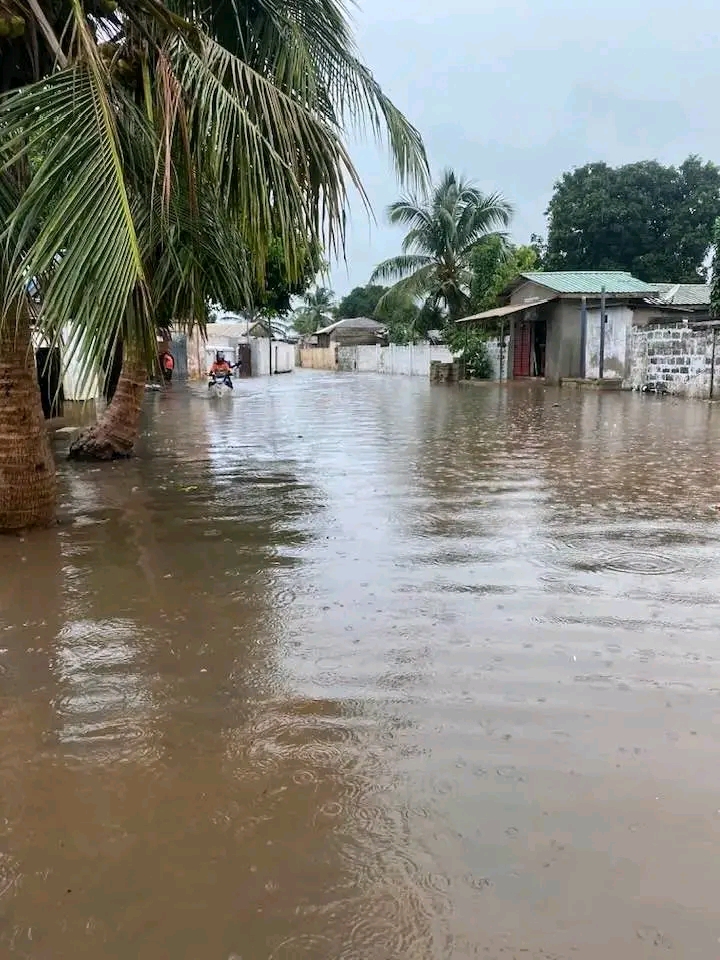
The opposition New Patriotic Party (NPP) has called for a comprehensive restructuring of the government’s flood management system, arguing that the latest flooding across parts of Accra exposes serious weaknesses in the country’s emergency response and disaster prevention framework.
In a statement signed by the party’s General Secretary, Justin Kodua Frimpong, on June 29, 2026, the NPP said the recurring floods demonstrate the need for government to adopt a more coordinated and accountable approach to flood prevention and response.
The party proposed that responsibility for flood management should be consolidated under a single ministry, with a clearly designated authority to coordinate planning, implementation and emergency interventions.
It also called for a full public disclosure of the activities, financing and expenditure of the government’s anti-flood task force, insisting that transparency and accountability are essential to restoring public confidence.
According to the NPP, the current arrangement, which splits responsibilities between the Ministry of Local Government and the Ministry of Works, Housing and Water Resources, has created overlaps and weakened effective coordination during flood emergencies.
The party further questioned the reported role of the Deputy Chief of Staff in coordinating flood response activities, arguing that disaster management should be led through clearly defined institutional structures rather than ad hoc arrangements.
The statement followed widespread flooding in several parts of the capital after heavy rains inundated communities including the N1 Highway, Apenkwa, Achimota, Kaneshie, Weija, Spintex, Darkuman Junction and sections of the Kwame Nkrumah Interchange.
While expressing sympathy to affected residents, the NPP maintained that repeated flooding reflected shortcomings in the implementation of long-term drainage and flood mitigation projects.
The opposition also alleged that some flood control initiatives announced by the government had either not been fully implemented or had suffered setbacks due to funding constraints.
The party criticised comments attributed to President John Dramani Mahama during a town hall meeting abroad, in which he reportedly linked flooding partly to human behaviour, arguing that government should accept primary responsibility for designing and maintaining effective drainage infrastructure instead of placing emphasis on public conduct.
According to the NPP, although environmental practices such as indiscriminate dumping contribute to flooding, it is ultimately the responsibility of government to develop resilient drainage systems, enforce planning regulations and ensure effective disaster preparedness.
The party further urged government to deepen collaboration with Metropolitan, Municipal and District Assemblies, engineers, environmental experts and urban planners to address drainage deficiencies, poor land-use practices and sanitation challenges that continue to worsen flooding in the capital.
It concluded by assuring flood victims of its support and pledged to continue demanding greater accountability from government over measures aimed at ending Accra’s perennial flooding.






