
















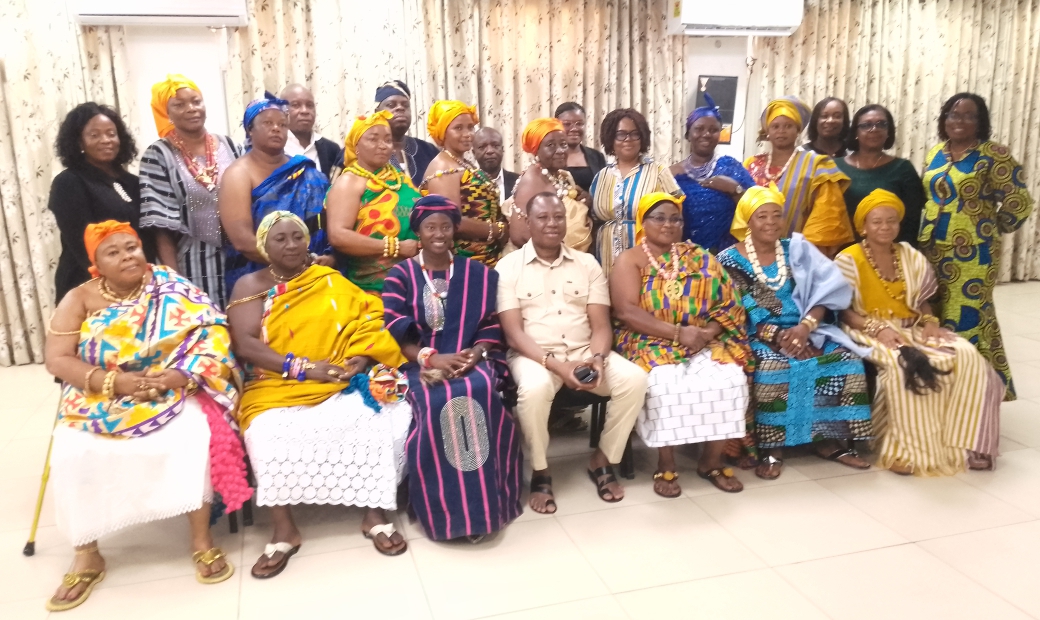
The All Regional Queenmothers Association has intensified efforts to secure stronger legal recognition and influence within Ghana’s traditional leadership structures following high-level talks with the Commission on Human Rights and Administrative Justice (CHRAJ).
The engagement focused on addressing long-standing barriers that limit queenmothers’ participation in decision-making within some traditional councils, where cultural and institutional constraints continue to sideline their roles.
Leading the delegation, Nana Otubea II disclosed that the Association is actively exploring constitutional and legal pathways to gain representation in the National House of Chiefs. She argued that queenmothers’ recognised status within Ghana’s traditional system warrants formal inclusion in national governance platforms.
Concerns over gender-based exclusion were strongly echoed by Rognaa Salma Chaana Abdul-Razak, who called for targeted legal support mechanisms for women facing discrimination. She emphasised that strengthening women’s participation in traditional systems is essential for inclusive and balanced community leadership.
Responding to the concerns, CHRAJ officials reaffirmed their readiness to support the initiative. Joseph Whittal, Commissioner of CHRAJ, indicated that the Commission’s nationwide legal network could assist in addressing governance and rights-related challenges within traditional institutions.
Deputy Commissioner Mercy Larbi also stressed that advancing women’s leadership requires more than policy commitments, urging a shift toward practical measures that create real opportunities and empower future female leaders.
The meeting ended with a commitment from both sides to deepen collaboration, with expectations that ongoing dialogue and legal support will strengthen the role of queenmothers in Ghana’s traditional governance system.






