
















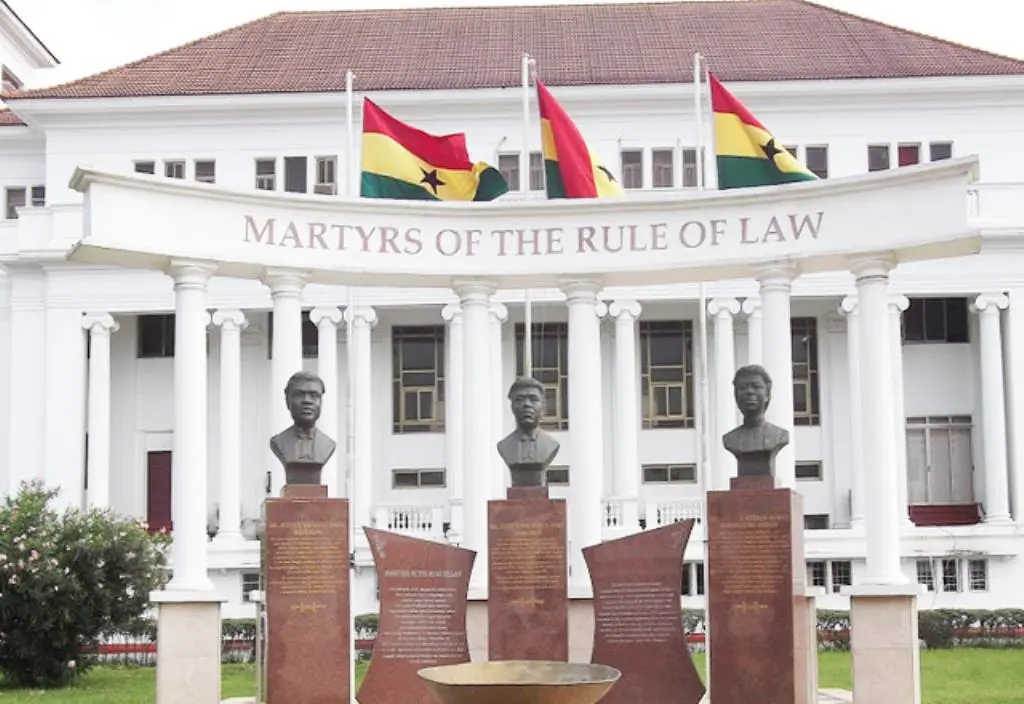
The Supreme Court is set to deliver a potentially far-reaching judgment on July 29, 2026, in a case challenging the delegate system used by political parties to elect their leaders and presidential candidates.
The suit, brought by former Minister for Environment, Science, Technology and Innovation, Prof. Kwabena Frimpong-Boateng, alongside Dr. Nyaho Nyaho-Tamakloe and former Lands and Forestry Minister Dr. Christine Amoako-Nuamah, seeks to overturn the delegate-based voting structure that has long been used by Ghana’s major political parties.
The plaintiffs argue that the current system limits participation in key internal elections to a relatively small group of delegates, executives and party officials, while excluding the majority of ordinary party members from directly selecting parliamentary and presidential candidates.
According to them, the arrangement undermines constitutional principles of equality, participation and democratic governance by creating an exclusive voting class within political parties.
The Supreme Court’s decision could have significant implications for the internal operations of political parties, particularly the New Patriotic Party (NPP), the National Democratic Congress (NDC) and the Convention People’s Party (CPP), whose constitutions currently provide for delegate-based elections.
Ahead of the substantive ruling, the court dismissed an application by the Liberal Party of Ghana seeking to join the proceedings.
The seven-member panel ruled that the party failed to file its application within the required timeframe and therefore could not be admitted to the case.
Represented by lawyer Oliver Barker-Vormawor, the plaintiffs maintain that political parties, as institutions recognised under the Constitution, must operate in a manner that reflects democratic values and guarantees equal participation for all members.
They are advocating the adoption of a universal suffrage model within political parties, which would allow every member in good standing to vote directly in internal elections rather than relying on delegates.
The Electoral Commission has also been named in the suit, with the plaintiffs arguing that the Commission has failed to adequately enforce provisions of the Political Parties Act relating to democratic governance within political organisations.
Among the remedies being sought are declarations that the delegate systems employed by the NPP, NDC and CPP are unconstitutional, as well as orders compelling the parties to amend their constitutions to permit direct voting by all eligible members.
The plaintiffs are also asking the court to direct the Electoral Commission to scrutinise political party constitutions more rigorously to ensure compliance with democratic principles.
Political observers say the ruling could reshape internal party democracy in Ghana by determining whether political parties should continue using delegate conferences or transition to broader membership-based voting systems for selecting leaders and flagbearers.
With the verdict now scheduled for July 29, attention is turning to what could become one of the most consequential judicial decisions affecting political party governance in recent years.






