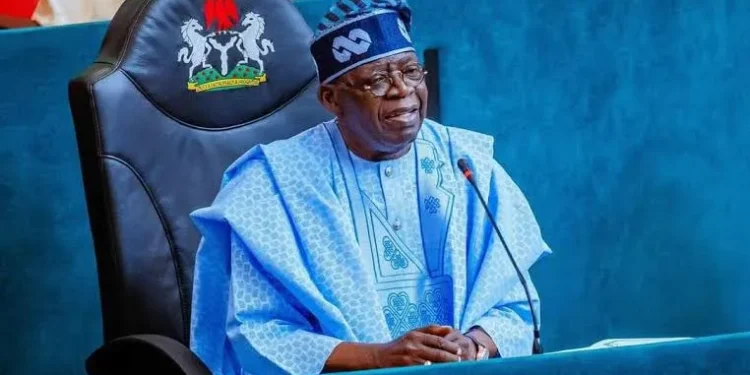
President Bola Ahmed Tinubu has rejected calls for Nigeria to reverse its ongoing economic reforms, insisting that the country must endure the associated hardships to address longstanding structural weaknesses in the economy.
In his 2026 Independence Day address on Thursday, October 1, as Nigeria marked 66 years of independence, President Tinubu said abandoning the reforms would risk returning the country to the economic conditions that made the changes necessary.
He acknowledged that the measures had imposed significant difficulties on citizens but maintained that those challenges should not be mistaken for the underlying problems the reforms were designed to address.
“Our reforms did not create the weaknesses in our economy. They confronted them,” he said.
President Tinubu argued that successive administrations had often relied on measures that provided temporary relief while allowing deeper economic distortions to persist.
He used the analogy of a patient suffering from cancer to explain his administration’s approach, saying Nigeria had for years relied on policies that eased symptoms without addressing the underlying condition.
“For too long, Nigeria’s leaders chose morphine while praying for a miracle that never came,” he said.
According to the President, his administration instead opted for measures aimed at confronting the structural problems, despite the immediate economic and social consequences.
“The reforms that followed were difficult. The side effects were real. Yet, we must never confuse the medicine with the disease,” he said.
President Defends Reform Direction
President Tinubu also criticised demands for a return to subsidy arrangements, urging Nigerians to resist pressure to abandon the reforms.
He described such calls as a “siren song” and said the government would remain focused on its broader objective of rebuilding the economy.
He said the reforms were introduced after the government inherited an economy facing serious challenges, including rising poverty and declining public confidence.
The President said his administration had therefore chosen to take difficult decisions intended to alter Nigeria’s economic trajectory rather than maintain policies that, in his assessment, had contributed to the accumulation of the country’s economic problems.
He maintained that the ultimate goal was to build a stronger economy capable of creating greater opportunities and improving the living conditions and dignity of Nigerians.
President Tinubu’s address placed the government’s economic programme at the centre of his Independence Day message, presenting the reforms as part of his administration’s broader effort to address structural economic challenges while pursuing Nigeria’s development aspirations.