
















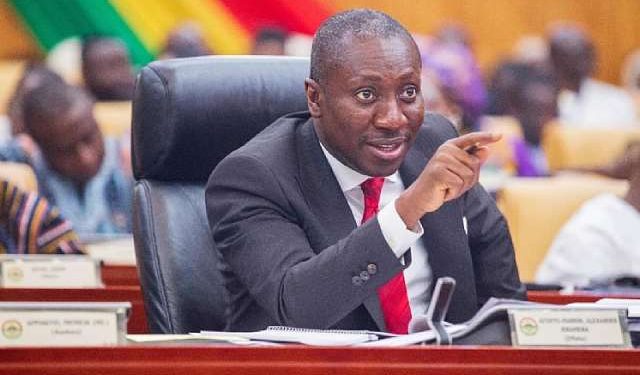
Minority Leader Alexander Afenyo-Markin has urged the Governor of the Bank of Ghana (BoG), Dr. Johnson Asiama, to uphold the independence of his office and avoid being drawn into political controversies.
Speaking in Parliament on Wednesday, March 5, during a session where Dr. Asiama addressed concerns over the cost of the BoG’s new headquarters, Afenyo-Markin warned against selective scrutiny of the central bank’s actions, questioning why some issues were being prioritized over others.
### **Calls for Consistency in BoG Oversight**
Afenyo-Markin pointed to past criticisms of the BoG’s regulatory oversight, referencing former President John Dramani Mahama’s 2015 State of the Nation Address, where concerns were raised about weak supervision of the banking sector.
“The governor today was the deputy governor then. Are we now picking and choosing which matters we want the governor to brief us on?” he asked, highlighting the need for consistent accountability rather than politically motivated inquiries.
The Minority Leader also cautioned Dr. Asiama against allowing political interests to influence the central bank’s operations.
“Mr. Governor, don’t make yourself a tool for political football. The role of the governor of the central bank is critical to the economy of this country. I do not want to politicize the office of the governor, and I urge others to do the same,” he stated.
Beyond addressing the BoG governor directly, Afenyo-Markin called on the Majority in Parliament to approach economic debates with caution, warning that the way such matters are handled could have lasting consequences for Ghana’s financial stability.
His comments come amid ongoing disagreements over the BoG’s decision to construct a new headquarters. While the Minority has raised concerns about due process, the Majority continues to defend the project’s legitimacy.
Afenyo-Markin’s remarks underscore the importance of keeping financial institutions independent and ensuring that economic discussions in Parliament remain focused on national interest rather than partisan politics.






