
















African climate negotiators have intensified calls for a unified continental approach to addressing the growing intersection between climate change, peace, and security.
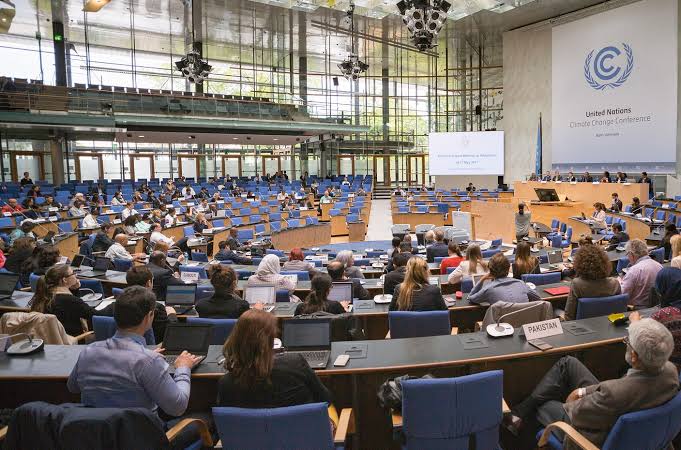
The appeal was made at the African Union Commission (AUC)–African Group of Negotiators (AGN) Consultative Meeting on Climate, Peace and Security held in Bonn, Germany, where policymakers and technical experts gathered to shape Africa’s position on climate-related security challenges.
Chair of the AGN, Nana Dr. Antwi-Boasiako Amoah, said Africa’s climate diplomacy must be firmly grounded in the realities faced by communities already grappling with environmental stress and socio-economic pressures.
He noted that climate change is worsening existing vulnerabilities such as food and water insecurity, displacement, and loss of livelihoods, while also straining governance systems across the continent.
According to him, the impacts of climate change are no longer theoretical but are already affecting daily life in many African communities, requiring practical and preventive responses.
Dr. Amoah stressed that while climate change does not directly cause conflict, it acts as a “risk multiplier” that intensifies existing pressures in fragile settings where institutions and communities are already under strain.
He argued that addressing these challenges should be seen as an investment in long-term resilience, stability, and sustainable peace rather than solely an environmental concern.
The meeting brought together representatives of the African Union Commission, the United Nations Office to the African Union, AGN lead negotiators, and technical partners to strengthen coordination on Africa’s emerging Climate, Peace and Security agenda.
Discussions focused on integrating climate adaptation, resilience-building, and peace considerations into national and regional policy frameworks, while ensuring African priorities are well represented in global climate negotiations.
Looking ahead to COP31 and COP32, Dr. Amoah called for stronger climate finance commitments and improved implementation support for vulnerable and conflict-affected communities.
He emphasised that funding mechanisms must be simplified and made more accessible to ensure that those most exposed to climate risks are not left behind in global responses.






