
















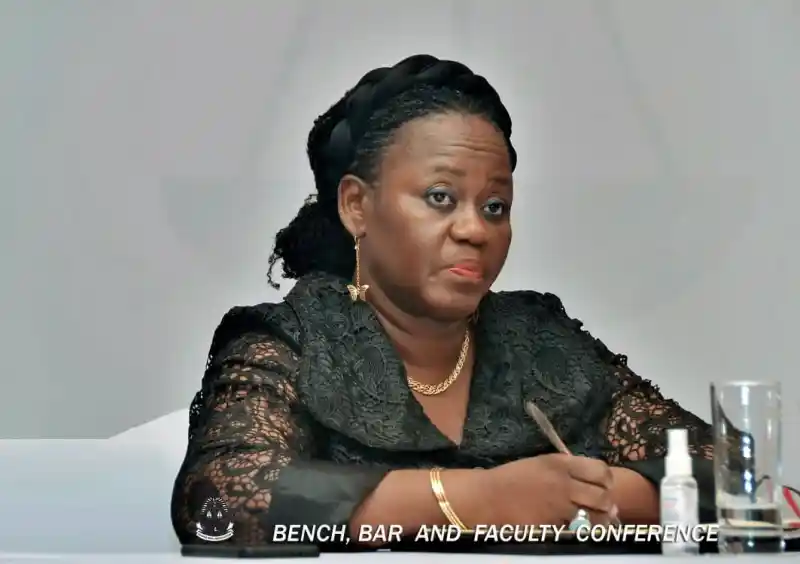
Chief Justice Gertrude Torkornoo has officially submitted her preliminary response to President John Dramani Mahama, addressing multiple petitions that have called for her early removal from office. The response comes after the 10-day deadline granted to the Chief Justice to react to the petitions expired on Monday, April 7, 2025.
The petitions, submitted last month, have ignited a significant legal and constitutional debate across the country, raising questions about the processes involved in the potential removal of a sitting Chief Justice. The matter has garnered national attention, sparking discussions about the balance between judicial independence and accountability.
Justice Torkornoo had previously requested full access to the petitions and an extension of at least seven days to adequately prepare her response, in line with due process and fairness principles. Her request was granted, and her written response has now been forwarded to President Mahama as well as the Council of State, marking the next step in the constitutional procedure outlined in Article 146(6) of the 1992 Constitution.
Under Article 146(6), if a petition is filed against a sitting Chief Justice, the President, in consultation with the Council of State, must form a five-member committee to investigate the allegations. This committee would consist of two Supreme Court Justices and three non-politically aligned individuals from outside Parliament, the Council of State, and the legal profession. This investigation would then determine whether the Chief Justice should be removed from office.
The submission of Justice Torkornoo’s response is a crucial development in the unfolding legal process, with the possibility of an investigative committee being established in the coming days. This marks the beginning of the next phase in the constitutional procedure, which could significantly impact the Chief Justice’s tenure.
In addition to this, a related legal challenge is set to be heard by the Supreme Court on April 9, 2025. The case, filed by Old Tafo MP Vincent Ekow Assafuah, challenges the legality of the President initiating the removal process before officially informing the Chief Justice, questioning whether this step complies with constitutional provisions.
The removal of a sitting Chief Justice is a highly sensitive matter in Ghana, governed by the provisions of Article 146. The article outlines a rigorous and protective process designed to preserve the independence of the judiciary while ensuring fairness in any proceedings. It mandates the formation of an investigative committee, guarantees the right of the Chief Justice to mount a defense, and requires that all proceedings be held in camera to protect the integrity of the process.
As the legal proceedings unfold, attention will remain on how the government and judiciary handle this sensitive issue, with implications for the judicial independence and governance in Ghana.






