
















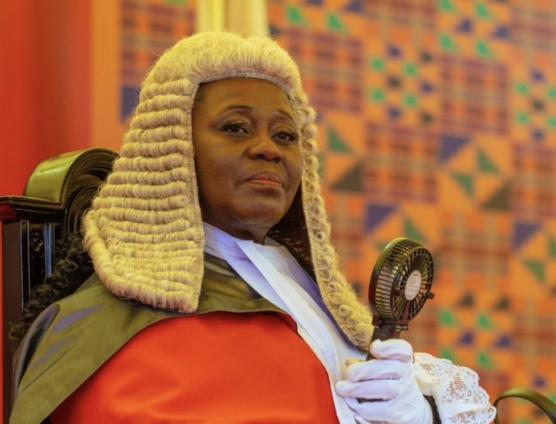
Amid increasing public attention on the fate of Chief Justice Gertrude Araba Esaaba Sackey Torkornoo, Mussa Dankwah, Executive Director of Global InfoAnalytics, is pushing for institutional reforms that would give Parliament a decisive role in the removal of top judicial officials.
Appearing on Channel One TV’s “The Big Issue” on Saturday, April 19, 2025, Dankwah argued that decisions of such national significance should not be left to closed-door committees or small panels, but rather debated and decided openly by the people’s elected representatives.
“We need a system that promotes transparency and accountability,” he said. “If Parliament is the body that approves the Chief Justice’s appointment, it should also be the body to decide on her removal.”
Dankwah criticized the current process—dominated by select committees—as lacking public trust and openness. Referring to such groups as “quangos,” borrowing from UK terminology for quasi-autonomous non-governmental organizations, he warned that leaving the decision to such entities undermines democratic principles and public confidence.
According to him, subjecting removal proceedings to parliamentary scrutiny would not only boost legitimacy but also allow for rigorous debate, evidence-based argumentation, and balanced judgment.
“In Parliament, arguments and counter-arguments would be made publicly. Ghanaians deserve to witness and understand the reasoning behind such a weighty decision,” he added.
His remarks come at a time when petitions seeking the removal of the Chief Justice have sparked nationwide discourse on the balance between judicial independence and accountability.
Dankwah’s intervention adds a new layer to the conversation, challenging the constitutional status quo and advocating for reforms that deepen democratic oversight in Ghana’s judicial system.
As calls for transparency and reform grow louder, the question remains: Should Parliament be the final arbiter in the removal of the country’s top judge?






