
















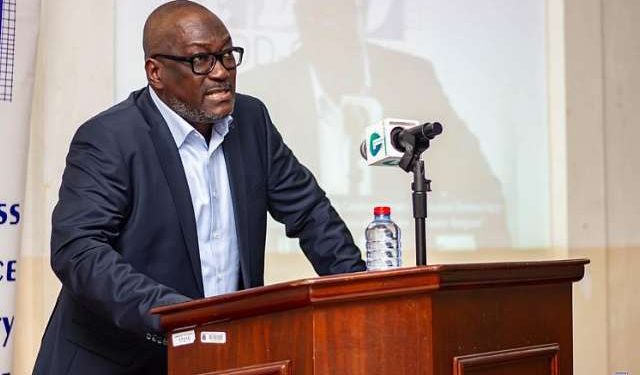
The Executive Director of the Ghana Center for Democratic Development (CDD-Ghana), Professor H. Kwasi Prempeh, has sharply criticized the opaque nature of judicial accountability processes, describing the constitutional provisions governing the removal of superior court justices as outdated and shrouded in secrecy.
His remarks come in the wake of the high-profile suspension of Chief Justice Gertrude Araba Esaaba Sackey Torkornoo, an event that has ignited a national conversation about transparency, fairness, and public trust in the judiciary.
Speaking out against Article 146 of the 1992 Constitution—which outlines the process for removing justices of the superior courts—Prof. Prempeh argued that the clause lacks the transparency essential for public accountability.
“Even if the proceedings are held behind closed doors, the final findings and rationale must be made public,” he said. “The people of Ghana deserve to know what evidence justified such a consequential decision.”
Concerns of Judicial Conflict of Interest
Prof. Prempeh also took issue with the structure of the investigative committee formed to probe removal petitions, especially in cases involving the Chief Justice. He raised red flags over the inclusion of sitting judges on such panels, citing potential conflicts of interest and peer bias.
“No sitting judge should sit in judgment over their colleague or, worse, their judicial superior,” he noted. “Using retired judges or career public servants would avoid this ethical minefield and preserve the integrity of the process.”
He further suggested that the President’s role in initiating and overseeing the process should be scaled back to a ceremonial function—limited to implementing the final recommendations of an independent removal committee.
Backdrop of Controversy
Chief Justice Gertrude Torkornoo was suspended by President John Dramani Mahama on April 22, 2025, after a prima facie case was established from three separate petitions. The move, made in consultation with the Council of State, triggered the appointment of Justice Paul Baffoe-Bonnie as Acting Chief Justice.
While a five-member committee has been empaneled to investigate the petitions, the continued lack of public disclosure regarding the allegations and supporting evidence has sparked disquiet among legal professionals, civil society actors, and ordinary citizens.
“Secrecy fuels speculation and weakens confidence in the judiciary,” Prof. Prempeh warned. “If justice is being done, it must also be seen to be done.”
As the investigation unfolds, growing calls for constitutional reform and greater transparency in Ghana’s judicial processes are putting the spotlight on the very foundation of the country’s democratic accountability mechanisms.






