
















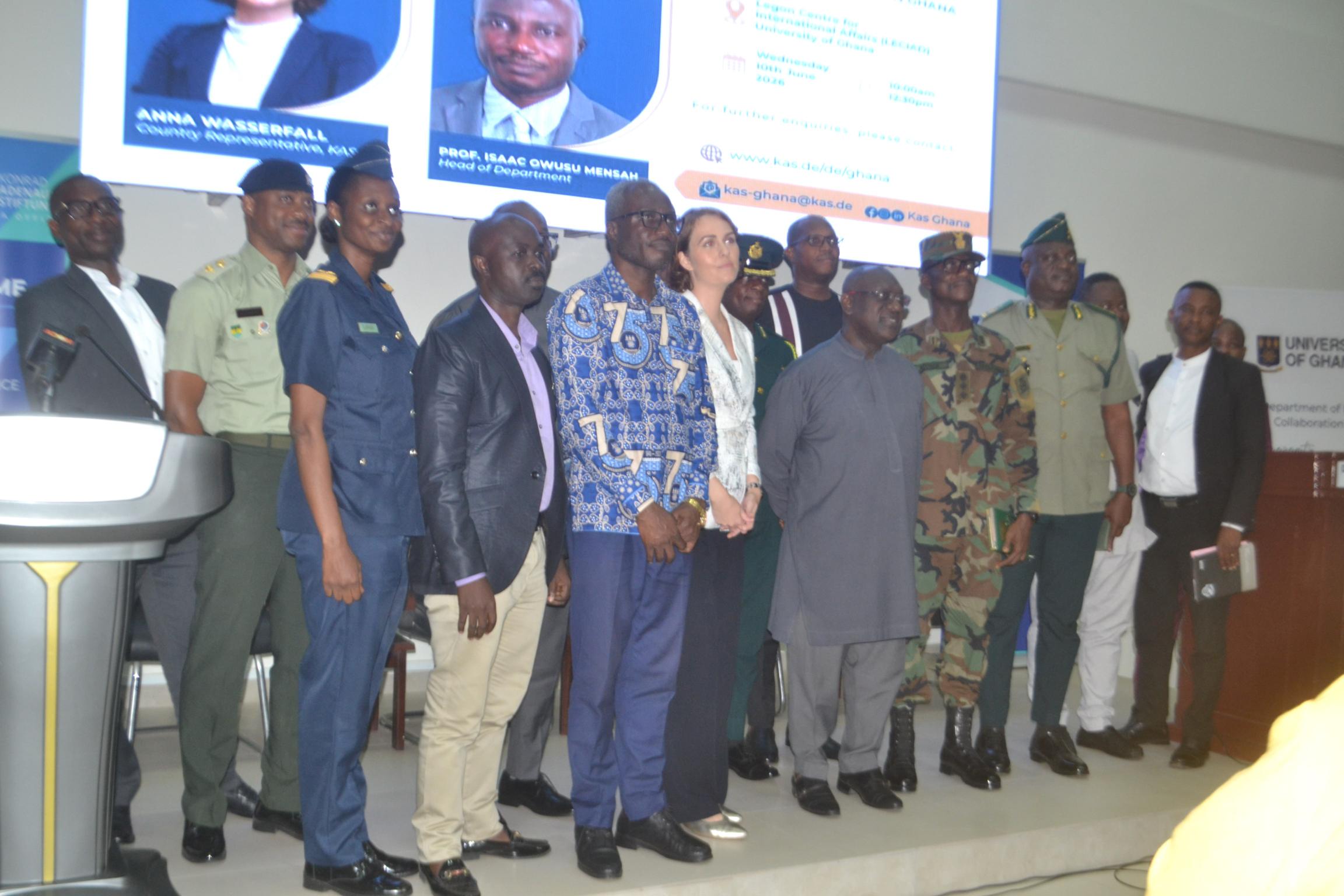
A new study has revealed that while a majority of Ghanaians remain committed to democratic governance, rising concerns over corruption and economic hardship are driving increased sympathy for military rule among some citizens.
The research, conducted by the Department of Political Science at the University of Ghana, found that 55 per cent of respondents preferred democracy to military rule, while 23 per cent expressed support for military governance.
Presenting the findings at a dissemination event in Accra, Professor Isaac Owusu Mensah, Head of the Department, said the results highlight both confidence in Ghana’s democratic system and growing frustrations with governance challenges.
The study, titled *“Stocktaking of Ghana’s Democracy: Undertones and Public Perceptions of Military Rule and Democracy in Ghana,”* surveyed 6,719 respondents across all 16 regions and 107 constituencies, supplemented by focus group discussions involving 50 participants in the Greater Accra Region.
Although 60 per cent of respondents said democracy was functioning well in Ghana and more than half expressed satisfaction with its practice, many also pointed to significant shortcomings.
Corruption emerged as the leading concern, with 39.5 per cent identifying it as the biggest threat to democratic development. More than 75 per cent said corruption had weakened their confidence in democracy, while over 80 per cent believed economic difficulties posed a serious challenge to governance.
The study found that democratic freedoms such as the ability to elect leaders, freedom of expression and equal political participation remain highly valued by citizens. However, respondents cited corruption, political division, slow decision-making and the failure to improve living standards as major weaknesses of the system.
Interestingly, despite widespread awareness of military regimes in neighbouring West African countries, many respondents viewed such governments as potentially more effective in addressing certain national challenges.
While 84 per cent associated military rule with restrictions on freedoms, fear and human rights abuses, more than half believed military administrations could be better at combating corruption and maintaining security.
Some participants even indicated that military intervention could be justified if elected governments consistently failed to tackle corruption, create jobs and improve economic conditions.
Professor Owusu Mensah said the findings should serve as a warning to political leaders, stressing that public frustrations over governance failures could erode confidence in democratic institutions if left unaddressed.
He noted that admiration for military governments elsewhere in the region was not necessarily a rejection of democracy but rather a reflection of citizens’ dissatisfaction with persistent corruption and economic challenges.
Country Director of the Konrad-Adenauer-Stiftung (KAS) Ghana, Anna Lena Sabroso-Wasserfall, said the study presents both encouraging and cautionary signals for Ghana’s democratic future.
She said while the findings show that democracy continues to enjoy broad support, they also underscore the need for continuous efforts to strengthen governance, accountability and public trust.
“The study gives us optimism and hope, but it also means that we must not be complacent,” she said.
According to her, addressing the concerns raised by citizens will be critical to sustaining confidence in Ghana’s democratic system and preventing further attraction to alternative forms of governance.






