
















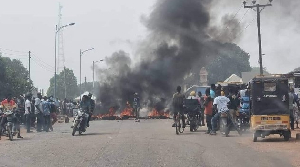
As Christians marked the resurrection of Jesus Christ, a symbol of reconciliation and new beginnings, The Very Reverend Emmanuel Nii Amanor Wellington, Superintendent Minister of Wesley Methodist Cathedral in Accra, used the occasion to call for an end to the deadly Bawku conflict, urging factions to embrace the spirit of Easter — forgiveness, unity, and peace.
Speaking in an interview with the Ghana News Agency after Easter Sunday service, Rev. Wellington appealed directly to the Kusasis and Mamprusis, the two main groups involved in the protracted conflict in Bawku, to lay down arms and allow healing to begin.
“It is my prayer that the conflict ceases,” he said. “The violence in Bawku has persisted because of the unwillingness to forgive. But peace only comes when we are willing to put our differences aside. We are one people with a shared future.”
Tying his appeal to the meaning of Easter, Rev. Wellington underscored the power of Christ’s resurrection as a foundation for forgiveness and reconciliation — principles he said should guide efforts to resolve the Bawku unrest.
“Forgiveness should never be mistaken for weakness,” he added. “Jesus Christ, who had all power, chose the path of sacrifice and forgiveness for the sake of peace. That is the message of Easter.”
He emphasized that holding onto grievances only fuels cycles of violence, whereas choosing to forgive creates the conditions for progress and development.
The Bawku conflict reignited in late 2024 when Alhaji Seidu Abagre, a Mamprusi chief previously enskinned in 2022, returned from exile following the withdrawal of an arrest warrant. His return reopened old wounds and reignited tensions that led to fresh clashes, resulting in over 47 deaths, including women and children. The violence has spread into surrounding areas such as Walewale, drawing national concern.
Rev. Wellington urged Ghanaians to view peacebuilding not just as a political issue, but a moral and spiritual responsibility. He called on churches, traditional leaders, and civil society to take active roles in promoting dialogue and forgiveness, especially during a season as spiritually significant as Easter.
“Easter is not only a Christian celebration. It is a national opportunity to pause, reflect, and heal. If we truly believe in the power of the resurrection, we must also believe in the power of peace,” he stated.
As economic and social pressures mount across the globe, Rev. Wellington also encouraged believers to deepen their trust in God and draw strength from the Easter message of hope and victory over adversity.






