
















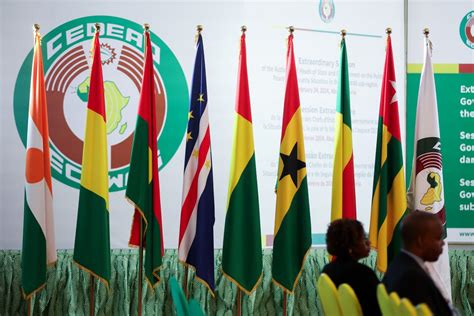
As West Africa navigates a shifting political and economic landscape, the Economic Community of West African States (ECOWAS) is set to officially launch its 50th anniversary celebrations on Tuesday, April 22, 2025, in Accra, Ghana—a symbolic nod to Ghana’s historical role in regional integration.
The launch, expected to attract Heads of State, government officials, ministers, and key dignitaries, marks the beginning of a year-long celebration of ECOWAS’ legacy and its vision for the future. It comes at a time when the bloc faces internal challenges, including the recent withdrawal of three member states—Burkina Faso, Mali, and Niger—in January 2025.
Despite the geopolitical strain, the upcoming Golden Jubilee is seen as a timely opportunity to reaffirm regional solidarity, revisit founding principles, and explore new pathways toward sustainable development, peace, and collective prosperity.
The event will feature the unveiling of a special 50th anniversary logo and theme, along with artistic performances that pay tribute to the community’s cultural richness and five decades of progress. The celebration, endorsed by the ECOWAS Conference of Heads of State and Government, also reflects a strategic pivot toward fostering people-centered development under the bloc’s Vision 2050.
Established in 1975 in Lagos, Nigeria, ECOWAS was born out of a shared commitment to economic integration and self-reliance. Since then, the bloc has expanded its scope from trade and customs to include cooperation in transport, agriculture, energy, peacekeeping, and governance. ECOWAS’ combined GDP currently stands at $734.8 billion, underscoring its economic significance within Africa.
While ECOWAS now comprises 11 active Member States—including Ghana, Nigeria, Senegal, Côte d’Ivoire, and Liberia—its recent history of political instability and military takeovers in parts of the region has challenged its cohesion and effectiveness.
Nonetheless, with Accra as the launchpad for its Golden Jubilee, ECOWAS is expected to highlight both its achievements and the urgent need for reform and renewal, especially as it seeks to transition from an “ECOWAS of States” to an “ECOWAS of Peoples.”
The institution, which restructured into a Commission in 2007 for enhanced strategic coordination, is currently led by a President, Vice-President, five Commissioners, and an Auditor General. It is funded primarily through a 0.5% community levy on imports from outside the region.
As ECOWAS prepares to reflect on 50 years of integration, the Accra launch is more than a commemoration—it’s a call for collective recommitment to the ideals of peace, progress, and people-driven development.






