
















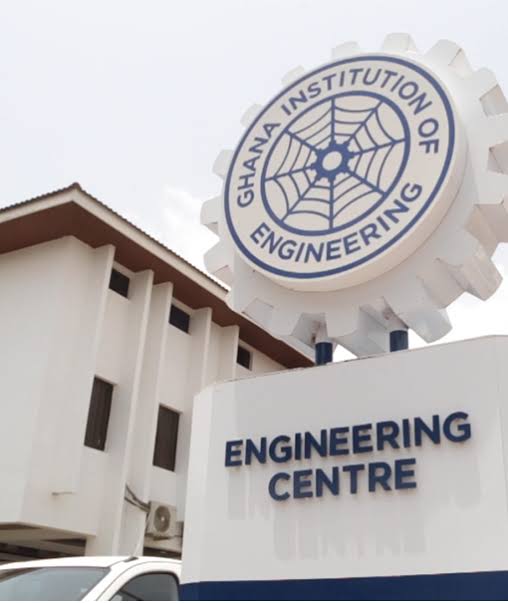
The Ghana Institution of Engineering (GhIE) is calling for a fundamental rethink of the country’s approach to stormwater management, warning that existing drainage systems are increasingly unable to cope with urban growth and changing weather patterns.
In a policy brief cited in Accra, the Institution said Ghana’s traditional drainage infrastructure—designed mainly to quickly channel stormwater away from cities—is now outdated and inadequate, particularly in fast-growing urban centres such as Accra.
It attributed the rising incidence of flooding to rapid urbanisation, widespread paving of land surfaces, poor waste disposal practices, and increasingly intense rainfall, all of which have overwhelmed existing drainage networks.
GhIE noted that flooding in Accra is no longer limited to the rainy season, but has become a recurring structural problem linked to the loss of natural water absorption areas and weak coordination among institutions responsible for drainage management.
The Institution also highlighted that many drainage channels have been clogged with solid waste, significantly reducing their capacity and worsening flood risks. It further pointed to persistent challenges within major systems such as the Odaw–Korle drainage basin, which continues to experience recurring flood events.
According to the report, fragmented institutional responsibilities and misaligned planning boundaries have made coordinated flood control difficult, limiting effective catchment-wide management.
To address these challenges, GhIE is proposing a shift away from conventional “drain-and-discharge” systems toward decentralized, nature-based solutions that work with natural water cycles.
These include permeable pavements, rain gardens, green roofs, bioswales, infiltration systems, and rainwater harvesting techniques aimed at reducing surface runoff and improving water absorption.
The Institution is also advocating for a National Post-Development Runoff Control Policy to regulate how much stormwater new developments generate, alongside a national rainwater harvesting framework and stronger enforcement of land-use regulations.
GhIE believes that adopting these reforms would reduce flooding, improve environmental quality, lower infrastructure costs, and create green employment opportunities while strengthening climate resilience.
It stressed that Ghana must urgently transition from traditional drainage engineering to more sustainable, ecosystem-based stormwater management practices, in line with global standards for climate-resilient cities.






