
















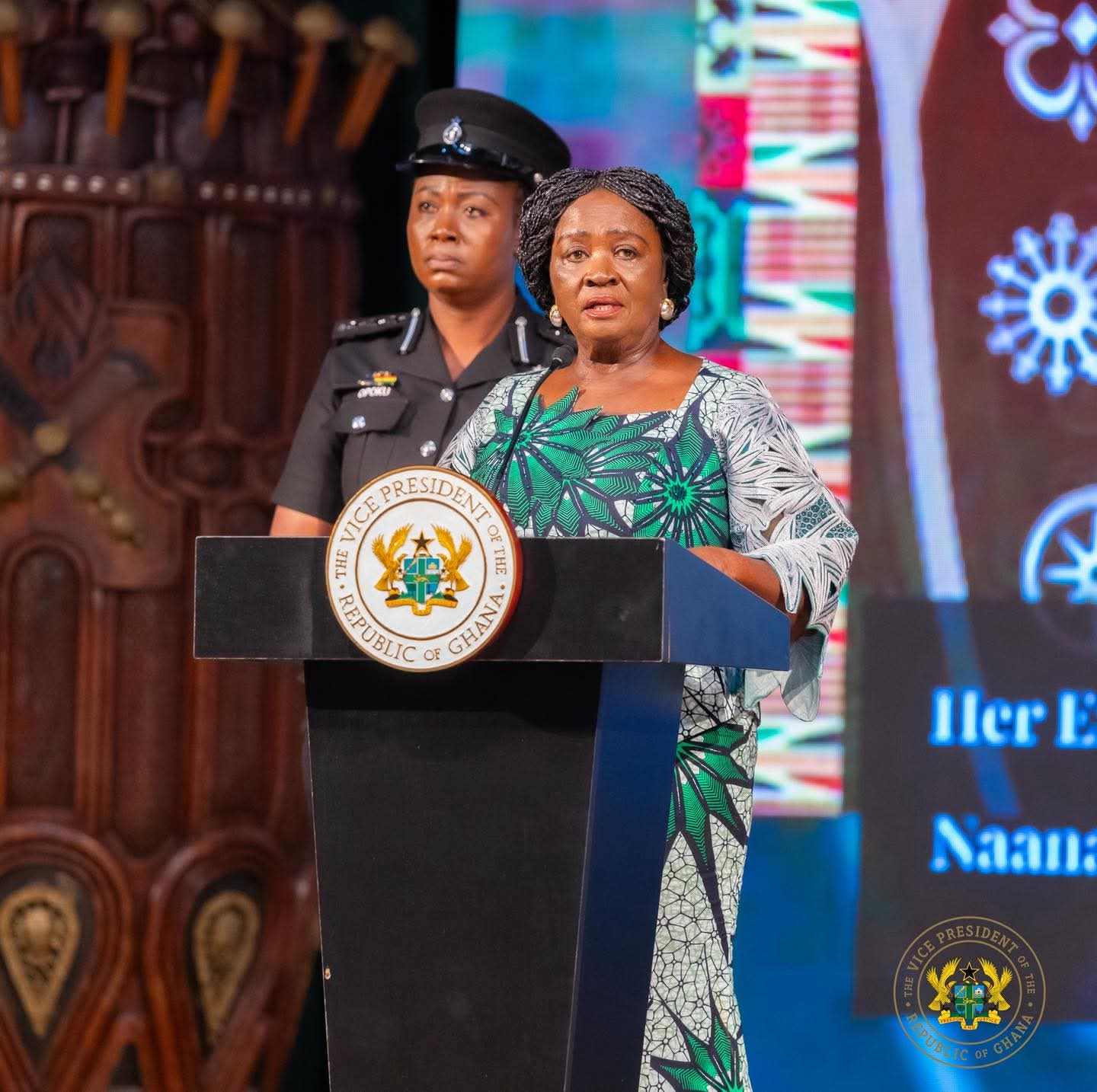
The Government of Ghana has unveiled a revised National Cultural Policy aimed at transforming the country’s cultural and creative sectors into key contributors to economic growth, job creation and national development.
The policy was officially launched by Vice President Prof. Naana Jane Opoku-Agyemang at a ceremony attended by the Minister for Tourism, Culture and Creative Arts, Hon. Abla Dzifa Gomashie, traditional leaders, members of the diplomatic community, development partners and stakeholders from the creative industry.
The revised framework seeks to place culture at the centre of Ghana’s development agenda by recognising it as a strategic tool for economic transformation, social cohesion, education and employment generation.
According to the Vice President, the policy reflects Ghana’s commitment to preserving its cultural heritage while creating opportunities for growth within the creative economy.
She noted that the new policy aligns with global and continental development frameworks, including the United Nations Sustainable Development Goals and the African Union’s Agenda 2063, which advocates a strong African cultural identity and shared values as foundations for sustainable development.
Prof. Opoku-Agyemang emphasized that culture remains a vital asset in an increasingly interconnected world, highlighting the importance of language preservation and cultural intelligence in promoting Ghana’s identity internationally.
She said strengthening cultural institutions and supporting multilingualism would help ensure Ghanaian values, perspectives and experiences continue to influence global conversations while remaining relevant to local communities.
The launch also highlighted recent milestones within Ghana’s cultural sector, including the recognition of Kente as a Geographical Indication and growing international recognition of Highlife music as a significant African cultural export.
The Vice President further acknowledged the contribution of Ghanaians in the diaspora, describing them as important partners in promoting Ghanaian culture abroad through investment, advocacy and creative enterprise.
She commended UNESCO, the European Union, civil society organisations, development partners and private-sector actors for supporting Ghana’s efforts to strengthen its cultural ecosystem.
As the country moves into the implementation phase, Prof. Opoku-Agyemang called for collaboration among government institutions, cultural practitioners, development partners and the private sector to ensure the policy delivers tangible benefits for citizens.
She stressed that culture should no longer be viewed solely as a symbol of identity but as a strategic national asset capable of driving economic progress and positioning Ghana competitively within the global creative economy.
The revised National Cultural Policy is expected to guide government interventions aimed at expanding opportunities in the arts, tourism, heritage preservation, cultural education and the broader creative industries.






