
















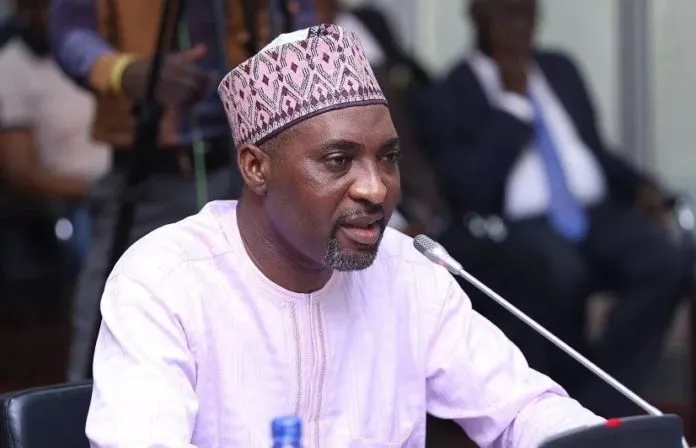
Ghana’s fight against illicit drugs is increasingly targeting the financial networks behind narcotics trafficking, with authorities recovering assets, gold and millions of cedis and dollars linked to suspected drug-related activities.
Interior Minister Mohammed Mubarak Muntaka disclosed that the country seized more than 8,500 kilogrammes of narcotic drugs and intercepted approximately 45.4 million tramadol tablets over the past 20 months as the government intensifies efforts to disrupt the illicit drug trade.
Speaking at the Government Accountability Series on Monday, August 24, 2026, Mr Muntaka said the enforcement campaign had also resulted in 217 arrests and 165 prosecutions during the period.
Beyond drug seizures and arrests, the government is pursuing the financial proceeds of suspected traffickers as part of a broader strategy to weaken the economic foundations of the narcotics trade.
According to the Minister, 73 assets have been recovered, while about 19 kilogrammes of gold have been seized in cases involving suspected drug-related money laundering.
Authorities have also restrained approximately GH¢6.9 million and US$440,000 in cash believed to be connected to suspected narcotics-related activities.
Mr Muntaka said the financial investigations were critical because taking drugs off the streets without disrupting the money generated from trafficking could allow criminal networks to continue operating.
He said the Narcotics Control Commission (NACOC) had significantly stepped up its operations, particularly against the growing use and distribution of synthetic drugs among young people.
“Narcotics Control has intensified its efforts, and imagine that in less than two years, over 45 million tablets of tramadol were seized and intercepted,” he said.
Prevention remains key
The government’s strategy also includes public education aimed at reducing demand for illicit substances.
Mr Muntaka disclosed that NACOC had conducted more than 2,000 drug education sessions across the country, targeting schools, tertiary institutions, religious organisations, communities and workplaces.
The programmes included 1,153 sessions at the basic school level, 185 at secondary schools and 41 at tertiary institutions.
Another 187 sessions were held in faith-based organisations, while 147 took place in communities and 235 were conducted at workplaces.
Despite the increased enforcement activity, the Minister identified rehabilitation as a major weakness in Ghana’s response to substance abuse.
He noted that Ghana currently does not have a state-owned rehabilitation centre, a gap he said needs to be addressed as part of a comprehensive national response to drug abuse.
The government’s approach therefore combines enforcement, financial investigations, public education and rehabilitation, with the ultimate objective of reducing both the supply of narcotics and the demand for them.






