
















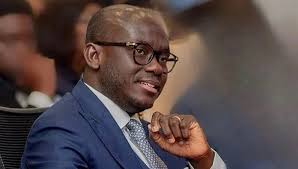
In an unusual but pointed public statement, Ghana’s former Attorney-General and Minister for Justice, Godfred Yeboah Dame, has publicly addressed what he describes as a growing pattern of professional misconduct and targeted vilification within Ghana’s legal community—citing fellow lawyer Thaddeus Sory as a key actor.
The remarks, published in a detailed Facebook post on May 24, 2025, reflect a deepening divide among top-tier legal practitioners and raise fresh concerns about ethical standards, internal rivalries, and politicization within the legal fraternity.
While acknowledging that he has long chosen to remain silent in the face of criticism, Dame said he was compelled to respond this time due to what he characterized as “a sustained campaign of abuse” that is not only personal but also undermines public trust in legal institutions.
“The abusive and offensive language you employ is deplored by most decent-minded legal practitioners,” Dame wrote. “I leave the authorities that regulate the legal profession… to judge.”
His post, though directed at Sory, sheds light on what many observers see as a worrying trend—the blurring of professional boundaries in high-stakes legal and political contexts. Dame accused Sory of exploiting legal commentary to advance political narratives, a charge that raises broader questions about the role of legal professionals in a politically polarized environment.
Dame’s defence of his record as Attorney-General extended beyond the courtroom, pointing to his leadership in international arbitration cases, the recovery of public funds, and efforts to defend judicial independence—even while acknowledging legal setbacks during his tenure.
More notably, Dame questioned the propriety of legal professionals who represent high-profile political clients while also engaging in public campaigns against judicial figures. Referencing Sory’s legal links to the Speaker of Parliament and to aggrieved parties in cases involving Chief Justice Gertrude Torkornoo, Dame implied a conflict of interest that could undermine judicial independence.
“If you do not find it incongruous that the lawyers of the heads of two arms of government have teamed up to remove the lady Chief Justice… I cannot fault you,” he stated.
This latest exchange adds to an escalating debate about the balance between legal advocacy and ethical restraint, especially in cases where lawyers are entangled in political power dynamics.
Analysts say the Dame-Sory spat reflects deeper institutional tensions within Ghana’s legal ecosystem—between those pushing for depoliticized, professional justice, and those navigating its murkier intersections with politics.
Legal experts are calling on the Ghana Bar Association and the General Legal Council to intervene and reaffirm the standards of decorum, impartiality, and accountability that are expected of the country’s top legal minds.
While Dame ended his post by expressing hope that it would be his final word on the matter, he also acknowledged the likelihood of further attacks.
“Knowing your obsession with me, I am sure it will draw more abuse from you,” he wrote, before signing off with a cryptic quip: “When Godfred Dame coughs, the whole NDC catches a cold.”
The controversy, though personal on the surface, has sparked a much-needed national conversation about the future of legal professionalism in Ghana—and whether political allegiances are beginning to corrode the sanctity of the law.






