
















The government has begun consultations with key ministries as it prepares to implement a new economic transformation programme expected to attract US$10 billion in investment into strategic sectors.
The Minister for Finance, Dr Cassiel Ato Forson, has taken the lead in the initial consultations, engaging the Ministry of Trade, Agribusiness and Industry as government works to translate the New Economy agenda into concrete programmes.
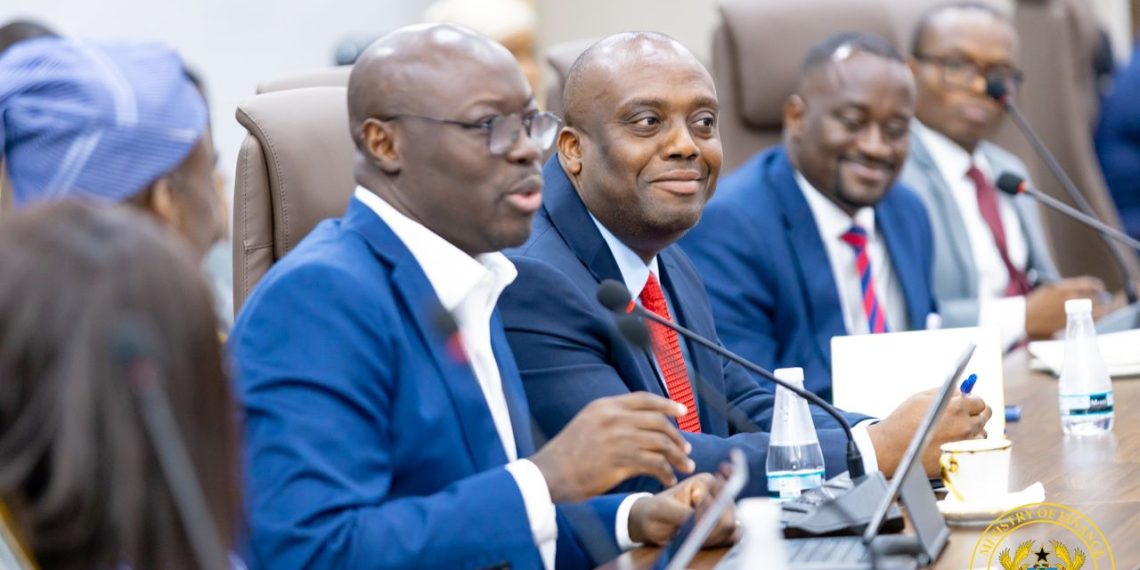
Dr Ato Forson, accompanied by his deputy, the Ministry’s Chief Director and other senior officials, met the Minister for Trade, Agribusiness and Industry, Elizabeth Ofosu-Adjare, and officials of her ministry.
The consultations are aimed at ensuring that key economic ministries are aligned ahead of the rollout of the transformational programme.
The New Economy agenda is intended to mark a shift in government’s economic strategy from stabilisation to expanding productive capacity, creating jobs, generating wealth and promoting sustainable economic growth.
Dr Ato Forson, speaking during the 2026 Mid-Year Fiscal Policy Review, said the government’s economic stabilisation efforts were only the beginning of a broader transformation agenda.
“Through the New Economy agenda that we will unveil, we will build an economy that does not merely withstand shocks but creates jobs, generates wealth and grows on the strength of what Ghana produces,” he said.
He added that stabilisation “was never the destination” but rather the foundation required to begin the next phase of economic transformation.
President John Dramani Mahama has subsequently announced that the programme will involve US$10 billion in investment targeted at key sectors of the economy.
The initiative is expected to focus government’s attention on expanding production, strengthening domestic industries and creating opportunities for employment and wealth creation.
The President is expected to provide further details of the programme when the 2027 Budget is presented to Parliament in November.
The ongoing ministerial consultations therefore represent an early step towards defining the priorities, investments and implementation framework for the New Economy agenda.
Government’s challenge will now be to translate the proposed investment into productive economic activity capable of delivering jobs, stronger businesses and sustained growth beyond the current phase of economic stabilisation.






