
















The government plans to establish 36 waste transfer stations across the Greater Accra Region as part of efforts to curb illegal dumping linked to the long distances waste collectors travel to disposal facilities.
Minister for Local Government, Chieftaincy and Religious Affairs, Mahama Ayariga, said the lack of accessible waste infrastructure was contributing to poor sanitation and encouraging some waste collectors to dispose of refuse at unauthorised locations.
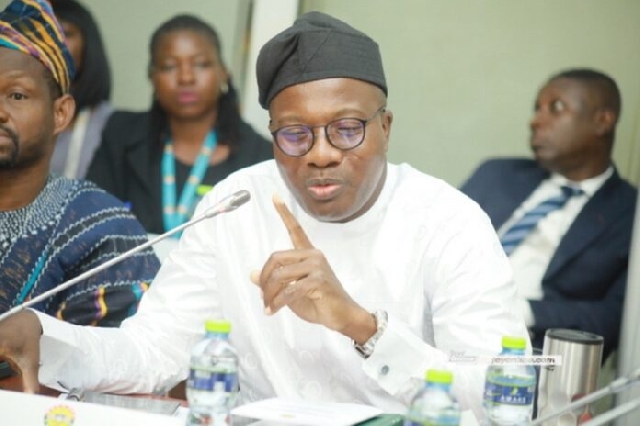
Speaking at the Government Accountability Series on Monday, October 5, 2026, Mr Ayariga said some waste collectors travel between 20 and 30 kilometres to reach disposal or transfer facilities.
He said the situation created an incentive for collectors to take shortcuts when they found cheaper and closer locations to dispose of refuse.
“If somebody offers them a corner somewhere to dump the waste for a small fee, trust me, they will cut those corners and then dump it there and go back just to pick the next load of waste,” he said.
To address the problem, the government is planning 36 transfer stations across Greater Accra to bring waste-disposal points closer to collection routes.
The government also intends to construct at least three additional landfill sites in the region, with Mr Ayariga describing the existing landfill infrastructure as inadequate for the volume of waste generated.
He said Greater Accra currently had only one landfill site at Pong, which he described as being in a poor condition and in need of immediate decommissioning.
“There’s no really functioning engineered landfill site,” he said.
According to the minister, the government is engaging the Ministry of Finance to secure funding for the construction of the proposed facilities.
The government is also considering incineration as part of a broader strategy to reduce the quantity of waste sent to landfills.
Mr Ayariga said President John Dramani Mahama had directed him to explore the construction of an incineration facility that could complement landfill operations.
Under the proposed system, waste would be separated, with recyclable materials recovered and other waste potentially used for energy generation.
The government also plans to provide waste bins to households and increase investment in waste collection trucks and tricycles.
Mr Ayariga said the cost of the investments would eventually be recovered through household payments for waste collection and revenue generated from recyclable materials supplied to recycling and waste-to-energy companies.
Beyond sanitation, the minister said the government expected the revamped waste-management system to create up to 20,000 permanent jobs within waste management and the circular economy.
He said existing waste-management operators would not be displaced and that the programme would also create opportunities for increased participation by women.
Mr Ayariga expressed confidence that the measures would begin to produce visible improvements in sanitation within a year.
“Give us one year and you will see the results that you will have when it comes to waste, efficient and effective waste management in the country,” he said.






