
















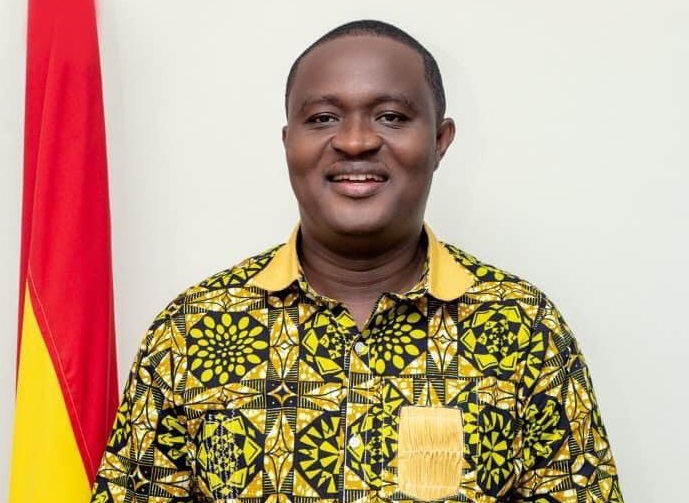
Former Education Ministry spokesperson Kwasi Kwarteng has challenged the government’s criteria for the placement of Basic Education Certificate Examination (BECE) candidates into senior high schools, arguing that the policy is shutting out thousands of students who deserve an opportunity to continue their education.
Mr Kwarteng, a member of the New Patriotic Party (NPP) National Communications Team, said the controversy should be separated from the debate over the Free Senior High School (Free SHS) programme, insisting that his concern is the criteria being applied by the Computerised School Selection and Placement System (CSSPS).
His comments follow a disclosure that about 55,000 candidates who sat the 2026 BECE will not qualify for placement because they failed either English Language or Mathematics.
According to CSSPS Coordinator Sherif Sulemana, about 565,000 of the more than 620,000 candidates who wrote the examination have qualified for placement.
“You are disqualified from placement if you have failed either English or Mathematics,” Mr Sulemana said on Joy FM.
However, Mr Kwarteng believes the classification of the affected students as having simply “failed” the examination does not tell the full story.
He said the current placement threshold differs from the approach adopted under the previous Akufo-Addo/Bawumia administration, under which students who passed at least one of the two core subjects could still gain admission to senior high school.
Those who failed both English and Mathematics, he said, were instead given an opportunity to rewrite the BECE at government expense.
“Many have not necessarily failed per se; rather, a difficult government placement policy has rendered them ineligible for SHS placement,” he said.
Mr Kwarteng acknowledged the need to maintain academic standards but argued that standards should not be pursued at the expense of access to education.
“Quality and standards matter, but education cannot be pursued on quality alone. A progressive education system must balance access, quality and relevance,” he said.
“We cannot improve quality simply by erecting barriers that exclude thousands of young people without giving them an opportunity to prove themselves.”
He cited cases of students who were unable to secure placement in the public system but later enrolled in private senior high schools and performed well, arguing that such outcomes raise questions about whether examination grades alone should determine a young person’s educational future.
The former Education Ministry spokesperson also questioned similar barriers in university admissions, including the use of grades such as D7 to determine eligibility.
“How does a Visual Arts student with a D7 become unfit for a Ghanaian university, yet enter another educational system abroad and be developed into a world-class architect?” he asked.
He pointed to Ghanaian doctors trained in countries such as Ukraine and Cuba as examples of students who, in his view, were given opportunities elsewhere after facing limitations within Ghana’s education system.
Mr Kwarteng further raised concerns about the implications of the stricter placement regime for the government’s plans to eliminate the double-track system in senior high schools.
“Having struggled to eliminate the double-track system they strongly criticised, is government now reducing SHS enrolment through obnoxious placement criteria to make double track easier to end without the corresponding expansion in infrastructure and capacity?” he asked.
He stressed that his position should not be interpreted as opposition to any review of the Free SHS policy.
“That is the issue I am raising, not the review of the Free SHS policy,” he said.
Meanwhile, the CSSPS has activated call centres to assist parents and candidates with placement-related complaints and challenges.
Mr Sulemana has urged affected candidates and their parents to use the designated call centres or regional resolution offices to seek assistance with issues arising from the placement process.






