
















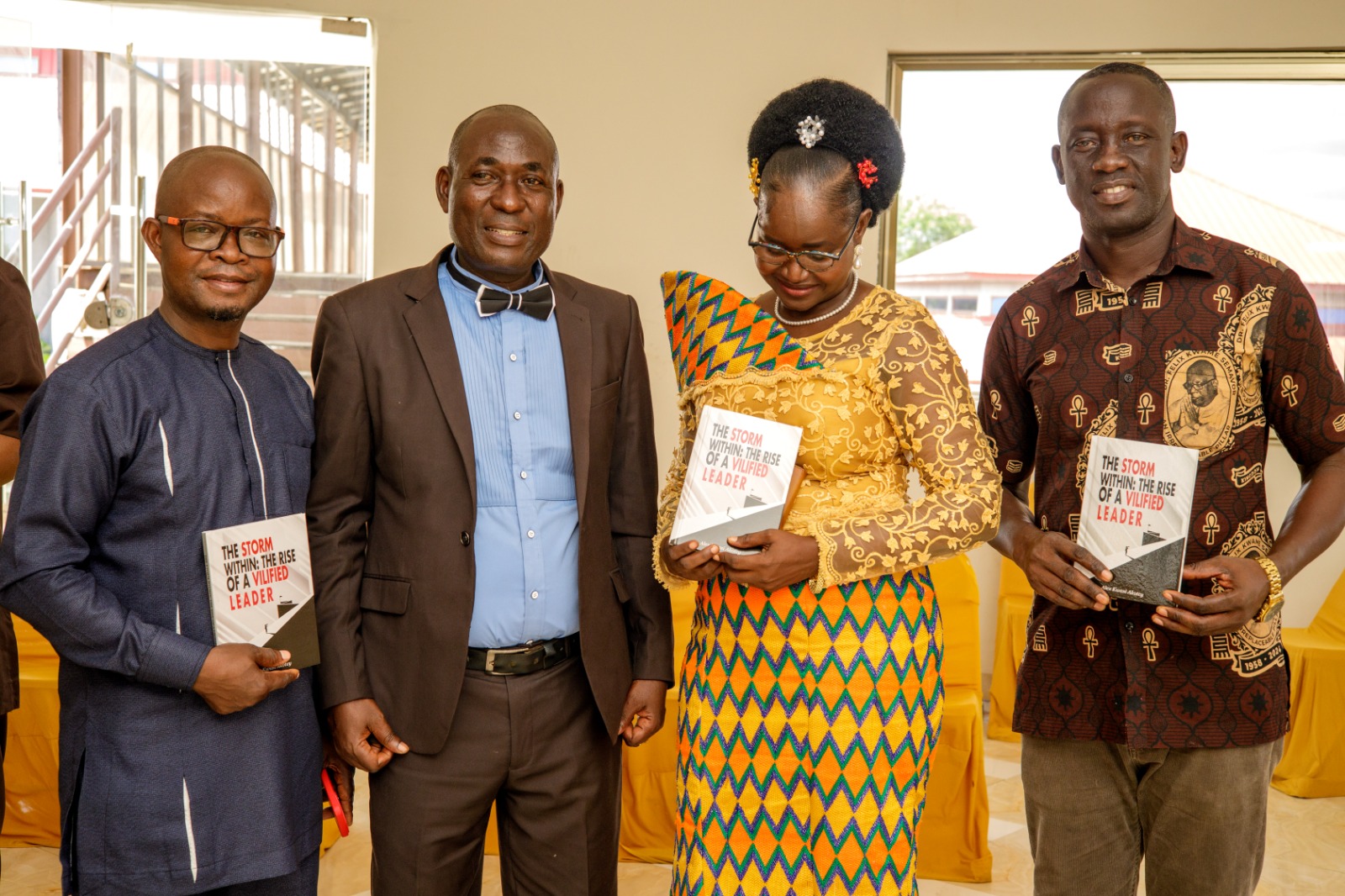
The Secretary to the Diocesan Laity Council of the Catholic Diocese of Keta-Akatsi, Mr Alex Kwasi Akotey, has called on leaders across all sectors to demonstrate boldness, integrity and resilience in addressing corruption and institutional inefficiencies affecting national development.
He said meaningful transformation often demands difficult choices and personal sacrifice, stressing that leaders committed to reform must remain firm even when faced with criticism or resistance.
Mr Akotey made the remarks at the launch of his leadership handbook titled “The Storm Within: The Rise of a Vilified Leader” in Sogakope, which focuses on the challenges faced by individuals who confront entrenched systems and vested interests.
The book advocates leadership rooted in accountability, justice, service and ethical responsibility, while exploring how reform-minded leaders are often misunderstood before their efforts are recognised.
“Transformational leadership is rarely convenient. Those who challenge broken systems are often misunderstood before they are appreciated,” he noted.
He further encouraged young people, professionals, public servants and religious leaders to remain committed to truth and principled leadership as a pathway to sustainable development.
Chairing the event, business executive Mr Maxwell Amekpor described leadership as central to national progress, urging leaders to remain guided by integrity despite pressure and public scrutiny.
He said the book launch provided an opportunity for reflection on the qualities needed to drive institutional growth and meaningful change.
Former First Deputy Speaker of Parliament, Mr Kenneth Dzirasah, also commended the author, stressing the need for courageous and ethical leadership to strengthen public trust in governance systems.
He urged leaders to uphold transparency and accountability in the performance of their duties.
The event, held under the theme “Leadership Beyond Resistance: Transforming Broken Systems with Courage and Vision,” brought together clergy, academics, public officials, business leaders and civil society representatives, who all underscored the importance of ethical leadership in national development.






