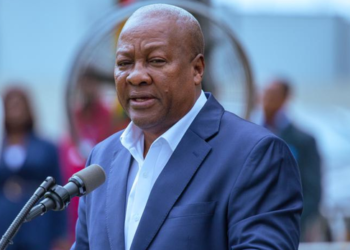
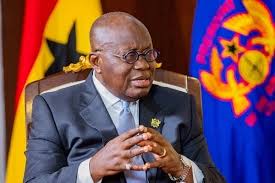
President John Dramani Mahama has issued a strong call for African-led reforms in global health governance, stating that the continent must no longer accept a marginal role in shaping systems that affect its own people.
Speaking at a high-level summit on African health sovereignty, the President rejected what he described as outdated global health structures that continue to sideline African voices and priorities.
“The world has changed. But global health governance has not kept pace with this change,” he declared, adding that current crises—from pandemics to climate disasters—have only underscored the fragility and inequity of existing models.
President Mahama framed the summit as a critical turning point for Africa to assert control over its health future.
“We gather here today with conviction—united by shared efforts and a collective refusal to accept Africa’s limited place in an outdated global health order,” he said.
The former president outlined a vision for an Africa that is not only a recipient of aid but an architect of its own resilient systems—ones that reflect the realities and aspirations of its people. According to him, these systems must be proactive rather than reactive, building long-term strength and equity instead of short-term crisis responses.
“We must move beyond systems that only react in times of crisis.
We must build systems that generate resilience, produce equity, and amplify the dignity and aspirations of our people.”
While advocating for reform on the global stage, Mahama also made the case for rethinking how African nations view health at the national level—not as a social cost, but as a core engine of growth and transformation.
Quoting data from the World Health Organisation, he stressed that the return on health investments is measurable and substantial:
“For every one dollar invested in health resilience, the return can be up to four dollars.
And in Africa, where a youthful and dynamic population is reshaping our economic landscape, that return is even greater.”
His remarks called on African leaders to move from rhetoric to action, to “reimagine the economies of well-being,” and to invest in systems that not only cure disease but protect livelihoods, empower women, and prepare the continent for future shocks.
Summing up the dual challenge of internal reform and global influence, Mahama concluded:
“This is our moment to lead, and we must rise to it—together.”