
















As Ghana grapples with fresh allegations of illicit drug trafficking through Kotoka International Airport (KIA), concerns are mounting over conflicting information from government representatives—casting doubt on the transparency of ongoing investigations.
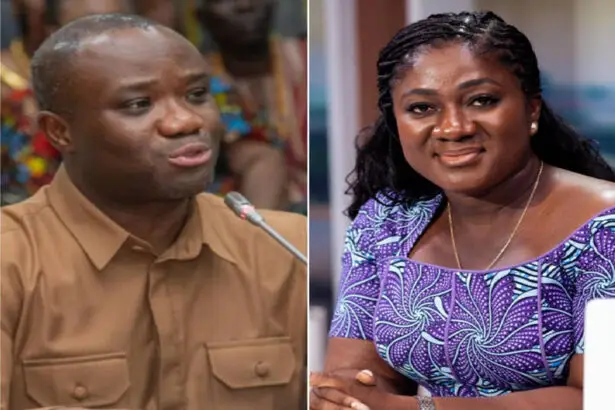
Former Deputy CEO of the National Youth Authority and parliamentary candidate for the New Patriotic Party (NPP) in Adenta, Akosua Manu, has spotlighted a critical inconsistency in the government’s narrative regarding the aircraft allegedly involved.
Taking to social media platform X, Akosua Manu challenged the Government Spokesperson’s reference to aircraft number N864AM, questioning why it differed from N823AM, the registration number originally associated with the suspicious flights.
“Why is the aircraft number different? The one in discussion is N823AM. The one you have posted has N864AM,” she wrote, igniting public scrutiny and a broader call for clarity from authorities.
The discrepancy emerges at a sensitive time, as John Ntim Fordjour, MP for Assin South and Ranking Member on the Defence Committee, has accused unnamed individuals of facilitating the arrival of two suspicious aircraft at KIA, allegedly linked to drug trafficking and money laundering.
President John Mahama has reportedly directed security agencies to coordinate with Rev. Fordjour to probe the claims. However, doubts have already been cast on the process after Felix Ofosu Kwakye, acting as a government spokesperson, preemptively dismissed the allegations—asserting that the flights in question were cleared of any wrongdoing, despite investigations not having concluded.
Security analysts have warned that such premature declarations undermine the credibility of the investigation, risking a loss of public confidence in Ghana’s ability to tackle organized crime.
The issue is gaining traction amid heightened international concern, especially after a BBC Africa Eye documentary released in March identified Ghana as an emerging drug trafficking hub. The report has dented the country’s image as a safe and stable gateway to Africa.
Experts such as Blessed Sogah, Regional Adviser for Anti-Money Laundering and Counter-Terrorism at the United Nations Office on Drugs and Crime, and anti-corruption advocate Kodjo Attisso, have both called for an independent and transparent probe, reinforcing the need to separate fact from speculation in matters of national and international significance.
With the public now questioning the government’s coherence and openness, calls are growing for official clarification on the aircraft discrepancy, as well as a full disclosure of findings from any investigations.
In a political environment increasingly defined by information warfare and public skepticism, the aircraft mix-up is more than just a clerical error—it may be a litmus test for Ghana’s institutional integrity and commitment to justice.






