
















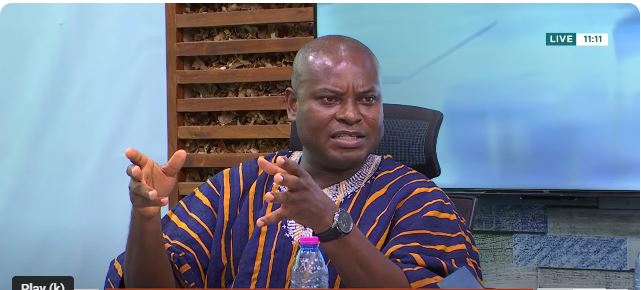
The Director of Communications for the New Patriotic Party (NPP), Richard Ahiagbah, has taken aim at President John Dramani Mahama’s handling of the illegal mining menace, blaming what he described as the President’s “soft” approach for the escalating galamsey crisis across the country.
Speaking on Channel One TV’s “The Big Issue” on Saturday, April 19, Ahiagbah accused the current administration of sending mixed signals to illegal miners, creating what he believes is a permissive environment for the practice to thrive.
“Galamsey has worsened under President Mahama because his campaign gave comfort to galamseyers. His approach so far has not been stern enough to serve as a deterrent,” Ahiagbah asserted.
He stressed that while he does not believe the President is directly endorsing illegal mining, the lack of visible and aggressive enforcement efforts undermines Ghana’s fight against the environmental destruction caused by the activity.
In light of the government’s much-touted “Reset Ghana Agenda,” Ahiagbah challenged Mahama to demonstrate firm political will to tackle galamsey head-on.
“If the reset agenda is truly about restoring Ghana, then fighting galamsey must be at the center of that vision. Right now, the signals are weak, and galamseyers aren’t getting the message,” he said.
Meanwhile, others in government remain optimistic about a new regulatory framework to tackle illegal mining from another angle. The Chief Executive Officer of the Ghana Investment Fund for Electronic Communications (GIFEC), Dr. Rashid Tanko Computer, highlighted the role of the recently established Ghana Gold Board (GoldBod) in clamping down on illegal gold trading.
He said the GoldBod Act (Act 1140), passed by Parliament and signed into law in April 2025, annuls all previously issued licenses by the Precious Minerals Marketing Company (PMMC) and centralizes gold trading oversight under one body. This, he believes, will reduce illegal transactions and improve state revenue from mineral exports.
As political leaders and state institutions present contrasting strategies to combat galamsey, the issue remains a flashpoint in Ghana’s political and environmental discourse—testing the resolve of the Mahama-led administration in addressing one of the country’s most pressing challenges.






