
















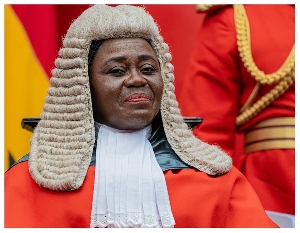
Ghana’s Chief Justice, Gertrude Torkornoo, has taken her battle against suspension to the ECOWAS Court of Justice, placing the future of judicial independence and constitutional accountability under regional spotlight.
For the first time in Ghana’s history, a sitting Chief Justice is challenging a presidential suspension before an international tribunal, claiming grave violations of her fundamental rights under the African Charter on Human and Peoples’ Rights.
At the heart of Justice Torkornoo’s legal action is her April 22, 2025, suspension by President John Dramani Mahama, executed under Article 146 of the 1992 Constitution—a provision that outlines how Justices of the Superior Courts may be removed. However, the Chief Justice argues that the very process intended to ensure due diligence was weaponized to undermine her rights, dignity, and professional standing.
The suit, filed at the ECOWAS Court in Abuja, seeks $10 million in compensation for moral and reputational damage and accuses the Ghanaian state of subjecting her to an unlawful and humiliating removal process. She also demands a series of declarations affirming that her suspension:
-
Violated her right to a fair hearing (Article 7),
-
Lacked an impartial tribunal,
-
Breached her right to dignified working conditions (Article 15),
-
Exposed her to public ridicule (Article 5),
-
Damaged her reputation beyond repair.
Legal observers say the case has ignited fresh debates over the balance of power in Ghana’s democratic structure, and whether constitutional provisions can be interpreted or enforced in ways that erode the independence of critical state institutions—particularly the judiciary.
The Chief Justice had previously challenged the removal process domestically. While the Supreme Court dismissed her injunction request, her core constitutional arguments are still pending before Ghanaian courts. Yet, her decision to go regional signals a deeper lack of trust in the neutrality or timeliness of the domestic legal remedies, according to constitutional analysts.
Critics of her move argue she should have waited for Ghana’s courts to fully conclude their review. But defenders cite ECOWAS Court precedent, which permits human rights complaints even when local cases are ongoing—as long as the matter isn’t before another international tribunal.
Beyond the legal technicalities, this case raises existential questions for Ghana’s democracy:
-
Can a Chief Justice be subjected to politically charged removal proceedings without eroding the public’s confidence in judicial impartiality?
-
Is Ghana’s constitutional framework strong enough to withstand what many are calling a “stress test” of democratic checks and balances?
If the ECOWAS Court sides with Torkornoo, it could have sweeping implications—not only for her reinstatement or compensation, but for how West African states handle judicial removals, executive overreach, and human rights guarantees for top public officials.
More than just a personal legal battle, this unfolding story could define the regional precedent for judicial protection, test Ghana’s constitutional maturity, and shape the narrative on the separation of powers across West Africa.
As legal proceedings commence, one thing is certain: the eyes of the nation—and the region—are watching.






