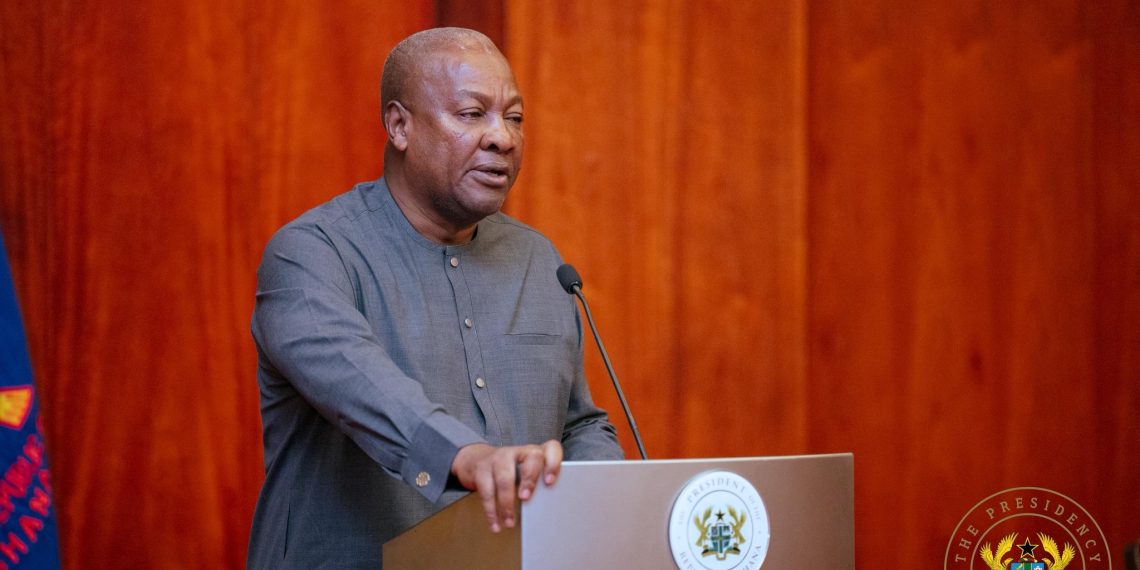
President John Dramani Mahama’s recent address at the United Nations General Assembly (UNGA) is drawing praise from gender advocates, who view it as a powerful call to action for world leaders—particularly in Africa—to place women and girls at the center of development.
Madam Josephine Oppong-Yeboah, a prominent Ghanaian gender advocate, has described Mahama’s speech as a landmark moment, applauding his courage to confront gender inequality on a global stage.
“It was deeply refreshing to hear an African leader urging the world to prioritise the protection and empowerment of women and girls,” she remarked, emphasizing that such messages are often lacking in international discourse—especially from leaders on the continent.
Mahama, addressing the UN in New York last week, underscored the urgency of achieving gender equality, stating, “True development is impossible without it.” He also made a symbolic appeal for the appointment of the United Nations’ first female Secretary-General, a proposal Oppong-Yeboah says demonstrates that representation matters as much as rhetoric.
“The President’s call shows that words do matter—but when backed by bold proposals like a female UN Secretary-General, they have the power to shift paradigms,” she said.
While commending global advocacy, Madam Oppong-Yeboah also pointed to Ghana’s domestic progress, including the recent appointment of the country’s first female vice president—a development she believes will inspire young girls across the nation.
“This is no longer just about political statements. It’s about shaping a world where girls grow up knowing they can lead, and lead well,” she added. “For the sake of my own 18-year-old daughter, I hope we’re moving toward a future that offers safety, equality, and opportunity for all women and girls.”
The gender advocate noted that while Mahama’s speech marks a significant step forward, sustained action is what will ultimately determine its legacy. She called on other African leaders to follow suit, not just in words but through policies that break structural barriers to female leadership.
Mahama’s UN address has reignited conversations around gender justice both at home and abroad, positioning Ghana as a potential leader in the global movement toward equality.