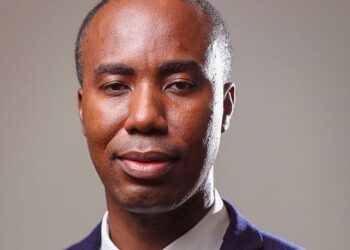
Former Speaker of Parliament, Professor Aaron Mike Oquaye, has cautioned young Ghanaians against entering politics for personal enrichment, urging them instead to pursue leadership anchored in knowledge, values and national service.
Addressing participants at the inception meeting of the European Union Women and Youth Democratic Engagement (WYDE) Project in Accra on Tuesday, Prof. Oquaye stressed that political leadership demands preparation, competence and ethical purpose.
“In this world of technocracy, every duty you are called upon to perform requires preparation. You must be purposeful about your interest in politics,” he said.
He noted that effective participation in national discourse and policy formulation required grounding in political philosophy and continuous learning. According to him, leadership is a discipline that must be cultivated.
“Those who want to rule must be taught and they must learn and they must commit themselves to ideas, beliefs and values. Knowledge is a tool of the trade,” Prof. Oquaye emphasised.
The former Speaker also encouraged aspiring politicians to seek mentoring from experienced leaders and to rise above partisan divisions. Politics, he said, should be viewed as a shared national responsibility rather than a battlefield of opposing camps.
“Politics is not dichotomy. It is a matter of us all preparing ourselves to serve our nation,” he stated, warning that when politics is reduced to a means of financial gain, it erodes public trust and undermines good governance.
The WYDE Project, organised by the Konrad-Adenauer-Stiftung (KAS) in collaboration with the European Union and the European Network of Political Foundations (ENoP), seeks to empower emerging political leaders—particularly women and youth—through capacity building, mentoring and networking.
Mrs Anna Wasserfall, KAS Ghana Country Representative, described the initiative as practical and results-oriented, combining structured training with targeted mentoring and networking opportunities. She urged participants to take ownership of the programme, stressing that its impact would depend on their commitment.
European Union Ambassador to Ghana, Mr Rune Skinnebach, underscored the need to place young people “at the very center of the action” in efforts to build inclusive democratic societies. He said the project aimed to strengthen youth voices and remove barriers to meaningful political participation.
Mr Gary Klaukka, Executive Director of ENoP, observed that democracy flourishes when young people are actively engaged in political parties and decision-making processes, describing Ghana as a strong example of multi-party democracy in the region.
Mr Rashid Ibrahim, President of the National Union of Ghana Students, welcomed the initiative, saying it would help address the longstanding gap in structured pathways for nurturing principled and issue-based youth leadership.
The engagement marked a renewed push to promote ethical, informed and inclusive political participation among Ghana’s next generation of leaders.